2nd International Summit on
Advanced ENT, Head & Neck Surgery
THEME: "Shaping the Future of ENT Care through Innovation and Excellence"
 15-16 Mar 2027
  London, UK
 THEME: "Shaping the Future of ENT Care through Innovation and Excellence"
15-16 Mar 2027
London, UK 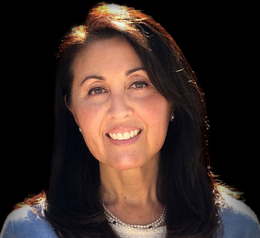
University of California San Diego, United States
Title: Nasal Reconstruction and the Role of Tissue Engineering
Dr. Watson is a Professor at the University of California-San Diego and the Residency Program Director for the Department of Otolaryngology-Head and Neck Surgery. She earned her medical degree from the University of Southern California, completed her residency at UCLA, and finished fellowship training in Facial Plastic & Reconstructive Surgery in Chicago. She is double Board-certified by the ABOHNS and the ABFPRS. She teaches and mentors surgical residents, medical students, and bioengineering students. She has pursued basic science research using autologous tissue-engineered cartilage as well as research in the educational arena with graduate medical program improvement studies. Her current clinical practice is focused on functional and aesthetic rhinoplasty.
Nasal reconstructive and rhinoplasty surgeons are frequently challenged by the demand for cartilage grafts to repair nasal framework defects created by trauma, previous surgical resection, or congenital deformities. Autologous grafts, particularly cartilage, continue to be the most favored reconstructive material for the nose. Potential autologous cartilage donor sites include the nasal septum, auricle, and rib. Nasal septal cartilage possesses significant advantages over these other cartilage donor tissues due to its favorable structural properties, ease of harvest, and minimal donor site morbidity. Because it is firm and nonmalleable, it possesses excellent supportive properties which enable it to resist deformity during the contractile healing process of the nasal skin-soft-tissue envelope. The fabrication of engineered human septal cartilage can offer the potential to produce adequate quantities of autologous cartilage in order to create grafts in defined shapes and sizes. In theory, the process would begin after a small septal cartilage donor specimen is obtained from the patient. Many of the initial steps in preparing the tissue involve standardized tissue culture techniques. However, modifications to the subsequent tissue growth process tend to affect the success for correct tissue development and maturation. These modifications have a significant impact on the tissue composition and its mechanical strength, which is critical in engineering a cartilage graft suitable for implantation into the nasal framework. Developments in cell expansion, scaffold creation, and three-dimensional (3D) bioprinting have advanced the field in recent years. An update of these various tissue growth methodologies is provided in this presentation.
